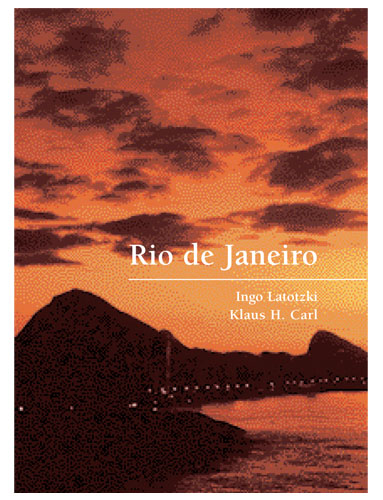
The Book
Like so many other cities of South America, Rio is an urban sprawl containing some truly stunning contrasts. Yet Rio comes alive, really, for only two things - football and the samba. According to the tradition founded by the Portuguese navigator André Gonçalves on 1 January 1502, Rio underwent major reorganisation under President Alvarez at the beginning of the 20th century. Avenues and boulevards were laid out in a logic that added overall cohesion to the city. The greatest architects of the time and place were invited to make use of their talents. The houses merge with the tropical countryside, which features banana and sugar plantations lining the large bay that is dominated by the Pão de Açúcar - famous Sugar Loaf Mountain. Rio is also famous for its wonderful beaches such as those of Copacabana and Ipanema on which the most beautiful women in the world tan themselves to a gorgeous golden colour wearing the skimpiest of costumes. Through colourful photos, Ingo Latotzki takes us on a guided tour of the city, from the areas of avant-garde architecture to the miserable shanties of the favelas - all of which empty themselves of their inhabitants during carnival, or when there is an important football match on at the Maracanã Stadium. Like its population, Rio is a compound of all colours, all the shades between black and white.
The Author
When not occupied with his editorial work for a major German newspaper, Ingo Latotzki explores the world in search of wonderful local colours. His perspective of Rio is that of someone not only passionate about the Carioca culture, but also about football and the samba.
Klaus H. Carl is the author of numerous works on the history of great cities, and is also a well-known photographer of flora and fauna. A teacher by profession, he is currently devoting himself to a monumental history of art.
×
Thank you and welcome!
You successfully subscribed to Parkstone International Newsletter.